
Is the structure there?
Examine the structures in the sample.
ab:MAX™ LIPOSOMAL TECHNOLOGY
From digestive exposure to absorption.
Explore why formulation matters.

01 / THE DIGESTIVE CHALLENGE
Before an ingredient can be absorbed, it must navigate a changing digestive environment. Its stability—and the way it’s formulated—can influence what becomes available for absorption.
As a supplement releases its contents, ingredients encounter stomach acid and digestive enzymes. How they respond depends on their chemistry and formulation.
Changing pH and chemical reactions can alter susceptible ingredients before absorption. Some remain stable; others are more vulnerable to degradation.
At the intestinal lining, stability is only part of the story. The ingredient must also be available in a form the body can absorb.
Illustrative ingredient particles, before liposomal formulation.
As a supplement releases its contents, ingredients encounter stomach acid and digestive enzymes. How they respond depends on their chemistry and formulation.
Conceptual illustration, not a product result. Stability and absorption vary by ingredient and formulation. Particle counts, size and timing do not represent measured loss or uptake.
FORMULATING FOR THE JOURNEY
Liposomal formulations can carry selected ingredients in a water-based interior or within a phospholipid membrane. The goal is to influence how an ingredient is carried and released. Performance depends on the specific formulation.
02 / THE LIPOSOMAL STRUCTURE
Scroll to see a phospholipid bilayer assemble around an illustrative vitamin C ingredient.
Water-soluble ingredients can sit within the liposome’s aqueous interior; fat-soluble ingredients can associate with its lipid membrane.
Encapsulation can help limit direct exposure to the surrounding environment. The degree of protection depends on the ingredient and membrane composition.
Lipid structures can change during digestion and release their contents. The goal is to help make the ingredient available for absorption; human testing determines whether exposure improves.
In the small intestine, bile and enzymes can reorganize or break down the lipid membrane, releasing its contents.
Released ingredients can become available for uptake across the intestinal lining. How much is absorbed depends on the ingredient and formulation.
Conceptual cross-section; not to scale. Encapsulation is illustrated, not a manufacturing process or absorption result.
03 / LOOK BEYOND THE LABEL
A liposomal structure explains the approach. Testing shows how a specific formulation performs, from stability and ingredient release to measured exposure in people.
Examine the structures in the sample.
Measure ingredient association.
Assess stability, release and digestive behavior under defined conditions.
Measure human exposure for the identified preparation. Clinical benefits need their own evidence.
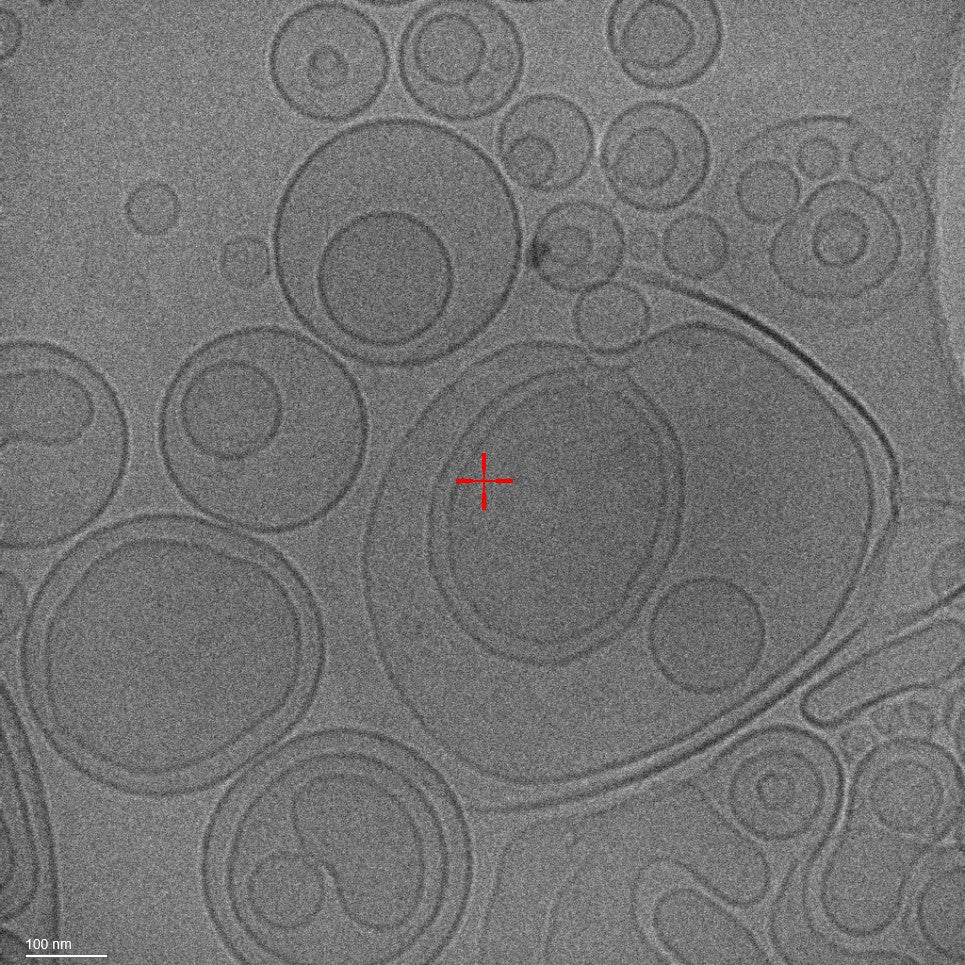
MAKE THE INVISIBLE VISIBLE
Imaging lets us examine visible vesicles. It is one piece of a larger validation process.
Inspect visible shape and layers.
An image alone cannot prove encapsulation percentage or absorption.
Read results with their sample and testing conditions.
 KOREAN DEVELOPMENT PLATFORM
DEVELOPED THROUGH KOREAN INNOVATION
Haroutine is backed by Wooree’s Korean development and manufacturing platform, connecting formulation, production and structural imaging.
04 / SCIENCE, MADE DAILY
Meet selected formulas that bring liposomal ingredients into your routine.
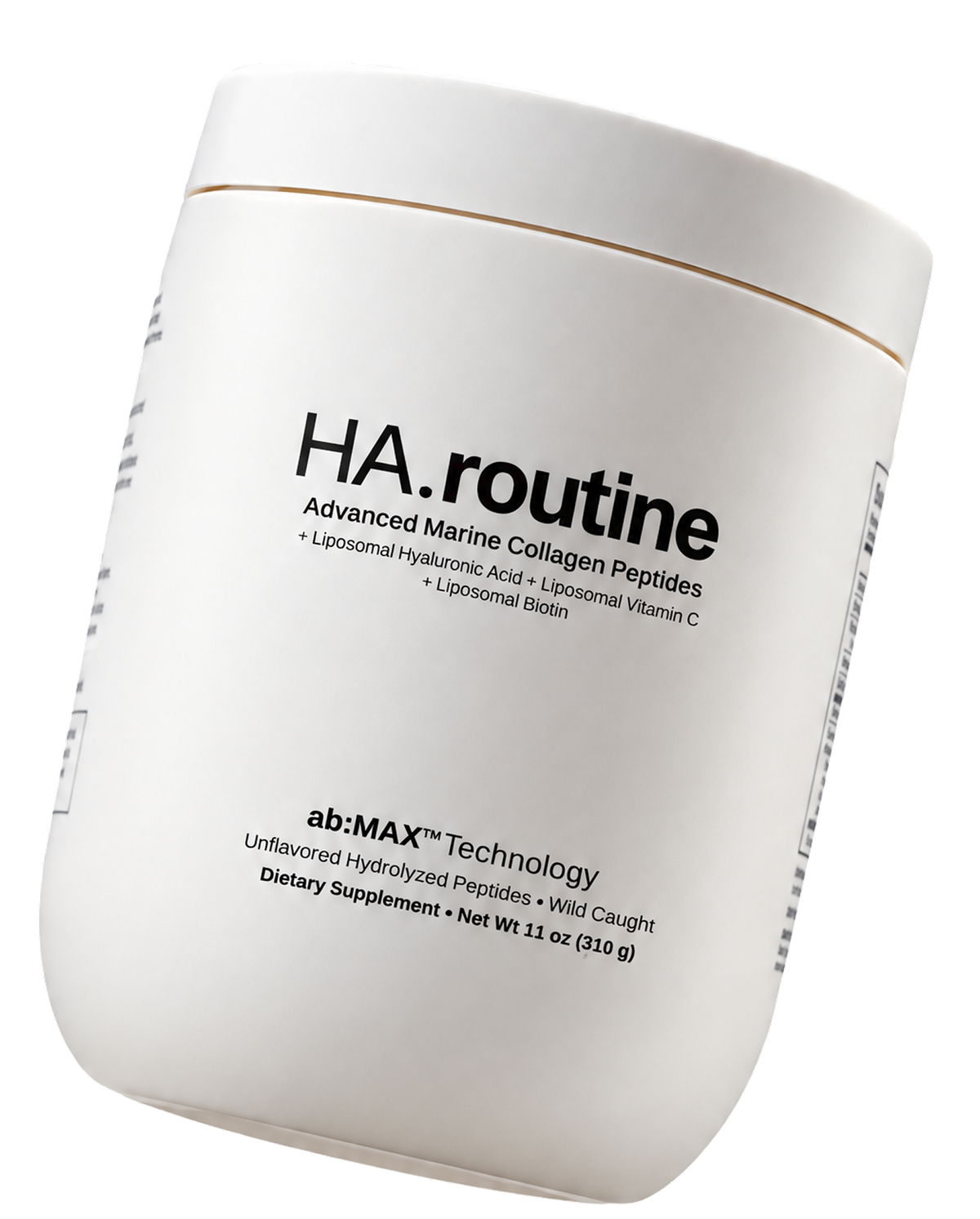
Marine collagen with liposomal supporting nutrients.
Explore the formula ↗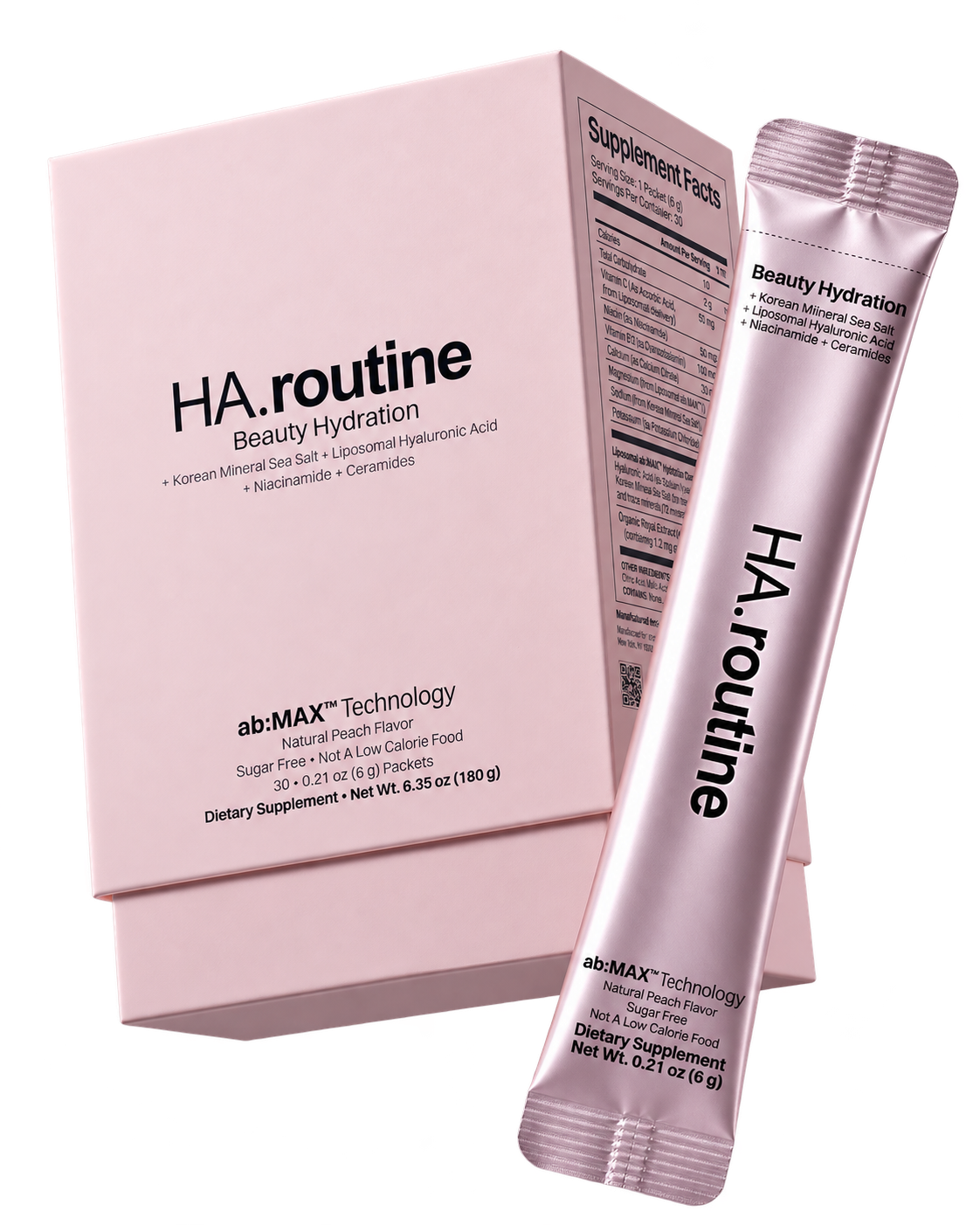
Electrolytes with liposomal vitamin C and hyaluronic acid.
Explore the formula ↗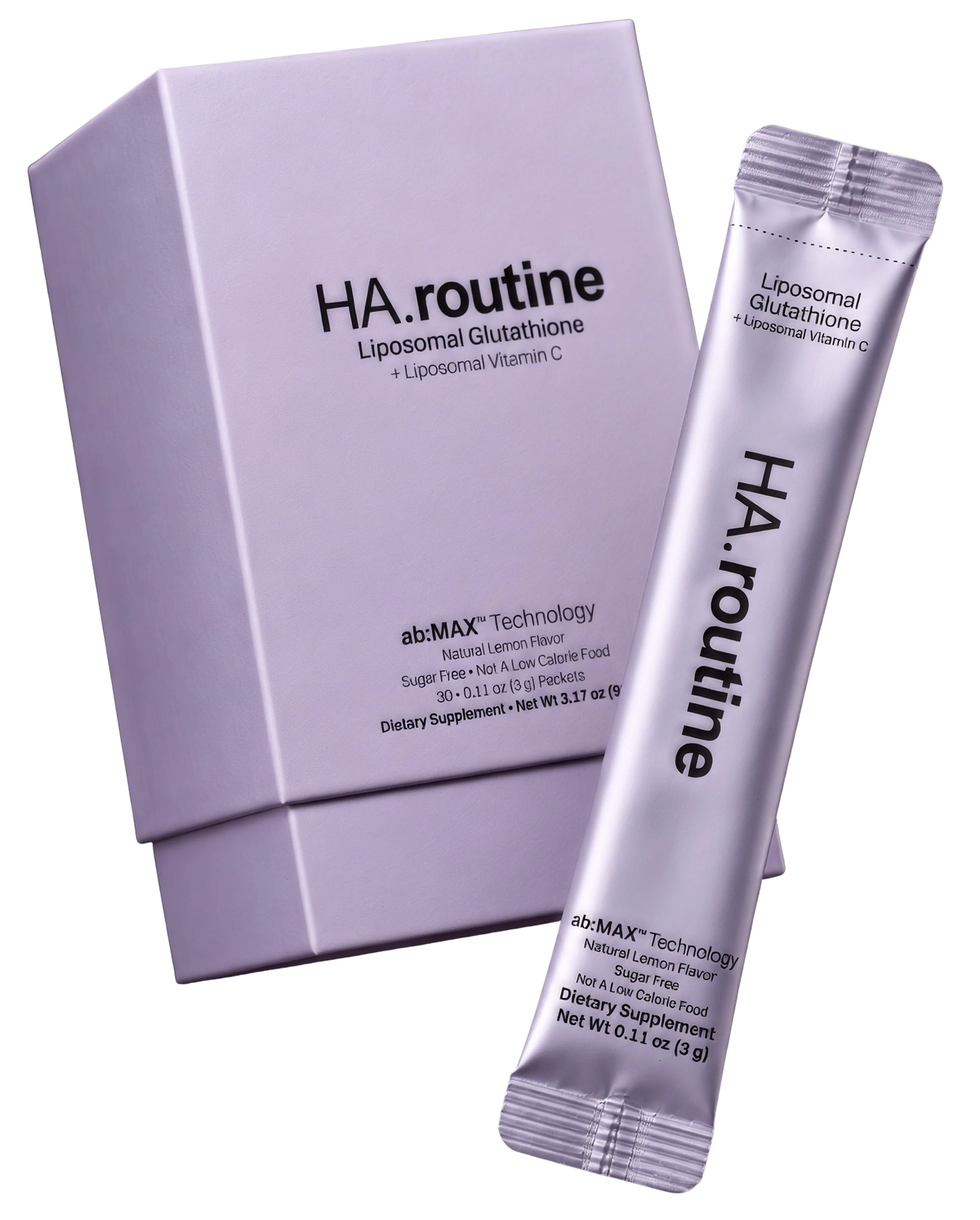
A daily addition to your radiance ritual.
Explore the formula ↗Liposomal refers to selected ingredients. AMC’s collagen peptides are not liposomal.
A LITTLE MORE CLARITY
No. Release and dissolution can help make ingredients available for absorption. Chemical degradation is different: it changes the ingredient itself. Sensitivity varies by ingredient and formulation.
Not necessarily. Bile and digestive enzymes can alter lipid structures and release their contents. A formulation needs its own testing; a liposomal label alone does not establish protection or absorption.
A microscopic vesicle with a phospholipid membrane. The formation illustration above uses a water-soluble ingredient inside its aqueous core.
No. Look at the identified ingredients in each formula. For example, AMC combines marine collagen with selected liposomal supporting nutrients.
That requires evidence for the specific preparation. The animations explain concepts; they do not show a measured absorption result.
It shows visible structures. Other methods address ingredient association, stability and human exposure.
Visit our validation standard ↗ for methods, research and the context behind each result.
GOOD SCIENCE BELONGS IN YOUR ROUTINE